
When it comes to learning new skills, choosing the right platform is key for your growth.
Think of it like picking between two gym memberships: one offers a wide range of equipment, while the other focuses on specialized classes.
The decision ultimately depends on your personal goals and how you like to learn.
📚 A: Coursera and 🎨 B: Skillshare both offer incredible learning opportunities, but each caters to different learning styles.
Coursera offers accredited courses and degrees, while Skillshare thrives on creative, community-based classes.
Why does this comparison matter? If you’re a small team or a decision-maker in charge of upskilling employees, choosing the right platform can maximize time and resources.
Let’s get started! 🚀
Coursera vs Skillshare Overview – 2025

Coursera is like enrolling in a university without the hefty tuition. It offers access to high-quality, university-backed courses in fields like technology, business, and healthcare, with certifications and degrees that are widely recognized by employers.
Whether you’re looking to deepen your expertise in a professional field, learn a new skill, or earn a degree from top institutions, Coursera provides a structured and formal educational experience.

On the other hand, Skillshare is like joining a creative studio where you can experiment and grow. Focused on creative industries like design, photography, and writing, Skillshare allows you to explore your artistic potential through hands-on projects and a community-based learning approach.
With no deadlines and an emphasis on personal growth, it’s perfect for those wanting to learn at their own pace and for anyone looking to build a portfolio of creative work.
Who Is Coursera or Skillshare Best For?
Coursera is perfect for those seeking formal, accredited education in fields like business, tech, and healthcare, offering structured courses with university-backed certifications, while Skillshare is ideal for creative individuals looking for flexible, project-based learning in areas like design and photography, with a community-driven approach.
Choose Coursera if… 👇
- You’re seeking accredited courses or degrees in business, technology, or healthcare.
- You want to add certifications to your resume from top-tier universities and institutions.
- You need structured, academically rigorous courses that follow a formal syllabus.
- You’re aiming to pursue career advancement or specialize in a particular field.
- You prefer learning through assessments, quizzes, and real-world applications to reinforce your knowledge.
Choose Skillshare if… 👇
- You’re a creative professional or someone wanting to pick up new artistic skills in areas like design, photography, or writing.
- You prefer community-driven learning with a wide array of creative courses and a collaborative environment.
- You’re looking for bite-sized lessons and enjoy learning through hands-on projects and real-world examples.
- You value flexibility, allowing you to start, pause, and finish courses at your own pace.
- You want to build a portfolio or gain practical skills that can be applied immediately in your personal or professional life.
Features Comparison
1. Core Functionality
Coursera: 🎓 Offers university-backed courses, certifications, and degree programs in fields like business, technology, and healthcare. It provides structured learning paths with assessments and quizzes to ensure comprehensive learning.
Skillshare: 🎨 Focuses on creative courses with project-based learning in areas like design, photography, and writing. It’s community-driven, allowing learners to engage with peers and get feedback on their work.
2. Customization / Workflow Flexibility
Coursera: ⏳ Provides a more structured experience, with set timelines for courses and degrees. While there’s flexibility within certain windows, the experience is formal compared to Skillshare.
Skillshare: ⏰ Completely self-paced, letting learners start, pause, and finish courses whenever they want. It’s flexible, making it easier for users to fit learning into their schedules.

3. Reporting & Analytics
Coursera: 📊 Offers detailed analytics, including course progress tracking, quiz performance, and completion rates, helping learners stay on track and assess their understanding of the material.
Skillshare: 📈 Provides basic progress tracking, showing the number of completed courses and projects. It’s less about formal assessments and more focused on personal growth.
4. Automation & Efficiency
Coursera: 🤖 Includes automated grading systems, peer assessments, and completion certificates, making it efficient for learners seeking formal qualifications.
Skillshare: 🔄 While it lacks automated grading, Skillshare is optimized for creative, self-paced learning, with an efficient platform that allows immediate application of new skills.

5. UI & Ease of Use
Coursera: 🖥️ The user interface is clean but more academic, with clear course structures, quizzes, and forums. It’s easy to navigate, though it may feel formal for those looking for a casual learning experience.
Skillshare: 📱 The interface is intuitive and visually appealing, designed for quick access to creative courses. It’s simple and user-friendly, perfect for jumping straight into creative projects.
6. Team Collaboration
Coursera: 👥 Limited collaboration features, with some group projects or peer assessments. It’s mostly individual-focused learning.
Skillshare: 🤝 Encourages collaboration through group projects and community interactions, allowing learners to share their work, get feedback, and connect with others.
7. Scalability
Coursera: 📈 Ideal for individuals or organizations looking to scale learning for employees, with enterprise solutions, certification programs, and advanced degree offerings.
Skillshare: 📉 Suitable for small teams or individuals focused on creative upskilling. While it’s scalable for small groups, it doesn’t offer the same corporate training infrastructure as Coursera.
8. Industry Fit / Use Case
Coursera: 💼 Best for industries like healthcare, tech, and business where certifications and degrees hold significant value. Ideal for professionals looking to advance their career with accredited credentials.
Skillshare: 🖌️ Best for creative industries like design, photography, and writing. Perfect for those looking to develop hands-on skills and build a creative portfolio.
Coursera vs Skillshare Pricing Breakdown
📊 Coursera Pricing
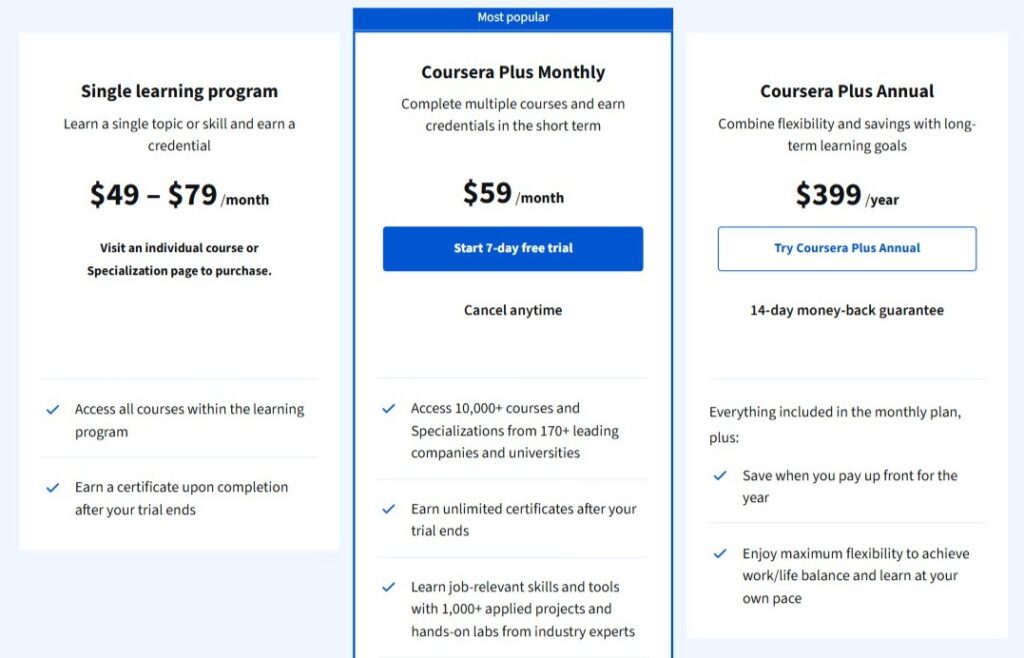
Standard Subscription (Coursera Plus) for Individuals
- Monthly plan: $59/month (cancel anytime) for unlimited access to most of the platform’s catalog.
- Annual plan: $399/year for the same access significantly cheaper per month if you plan to learn for a full year.
- Free trial: 7‑day free trial offered for Coursera Plus, allowing you to test the service before full payment.
- Money‑back guarantee: For the annual subscription, a 14‑day money‑back guarantee is available.
📊 Skillshare Pricing

Standard Membership (Individuals)
- Annual payment: $167.88 per year (which breaks down to ~ $13.99/month) when billed upfront.
- Monthly option: In some regions, a monthly billing option is shown as $13.99/month (though some sources report a higher monthly fee; pricing can vary by region and currency).
- Free trial: A free trial period is offered so you can test the platform before committing.
Team / Business Plans
Team memberships are billed annually (no monthly option) and pricing depends on number of seats/users.
🔍 Summary – Side‑by‑Side Comparison
| Platform | Annual Cost (Standard) | Monthly Cost (Standard) | Best Value Scenario |
|---|---|---|---|
| Coursera | ~$399/year (with trials & offers) | ~$59/month | If you’ll take many courses, need certifications/degrees. |
| Skillshare | ~$167.88/year (~$13.99/month) | ~$13.99/month (or more) | If you’re focused on creative skills and take a moderate number of classes. |
Learning Approach & Pedagogy
Coursera:
- Structured Learning: Offers structured, academic-style courses with set schedules and deadlines, similar to university courses. Learners follow a syllabus with assignments, quizzes, and exams, ensuring a formal and comprehensive learning process.
- University-Backed Pedagogy: Courses are designed and taught by instructors from top universities like Stanford, Yale, and University of Michigan, providing high-quality, research-driven content.
Skillshare:
Creative Pedagogy: Emphasizes creativity and community-driven learning, where instructors often guide learners through practical examples, allowing for self-exploration and development of personal projects.
Project-Based Learning: Focuses on hands-on, project-driven courses where learners can directly apply their knowledge to real-world tasks. The content is typically less rigid, giving learners the freedom to experiment and learn by doing.
Course Quality & Depth
Coursera:
- Wide Range of Subjects: Offers in-depth courses across various fields such as business, tech, health, and humanities. Many of the courses are part of longer specializations or degree programs, ensuring comprehensive coverage of each subject.
- Accredited Content: Coursera provides access to professional certifications and full degrees, ensuring that course quality is top-tier and recognized by employers.
Skillshare:
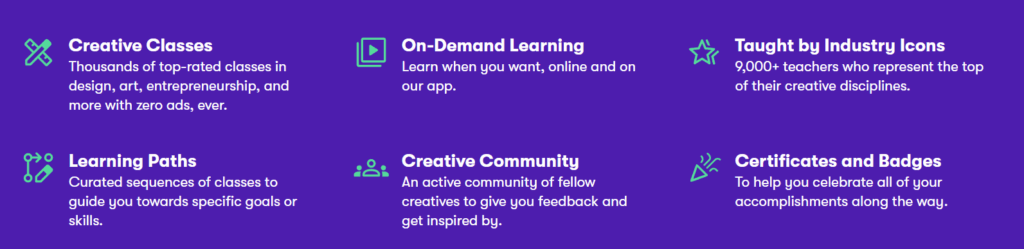
Community-driven Content: Skillshare’s content is curated by instructors with expertise in the creative field, providing learners with current, relevant, and hands-on skills to enhance their portfolios.
Creative Focus: Specializes in creative subjects like graphic design, photography, writing, and marketing. The courses tend to be shorter but are high on practical, real-world applications.
Credential Value & Accreditation
Coursera:
- Accredited Certifications & Degrees: Coursera offers official certifications from renowned universities, as well as full degree programs that are recognized by employers globally. These credentials hold high value in professional and academic fields.
- Industry Recognition: Learners receive credentials that are often directly aligned with industry standards, making them highly valuable for career advancement.
Skillshare:
Creative Portfolio: While not formal, the projects completed during courses can be added to a learner’s portfolio, which can significantly enhance their career prospects in creative industries.
No Formal Accreditation: Skillshare doesn’t offer accredited degrees or certifications. Instead, it provides course completion certificates that hold value within the creative community but aren’t recognized in formal employment settings.

Flexibility & Learning Pace
Coursera:
- Structured Timeline: Coursera’s courses, especially degree programs, have set deadlines and course schedules, offering less flexibility but more structure. This is ideal for learners who prefer a guided, traditional learning path.
- Self-Paced Options: Some individual courses offer a self-paced option, but the overall learning experience leans towards a more traditional academic model, requiring regular engagement.
Skillshare:
- Completely Self-Paced: Skillshare is highly flexible, with no deadlines or set schedules. Learners can start, pause, and complete courses at their own pace, making it ideal for those with busy schedules or who want to learn when it’s most convenient for them.
- Learn at Your Own Speed: This flexibility is especially beneficial for those exploring creative skills or those who want to dip in and out of various courses based on interest.
Conclusion

When choosing between Coursera and Skillshare, the decision boils down to your learning objectives. If you’re after structured, accredited learning with globally recognized certifications, Coursera is the clear winner 🏆.
It offers comprehensive courses and degrees in professional fields like business, technology, and healthcare, making it ideal for those who want to advance their careers with formal credentials.
On the other hand, Skillshare shines for those looking to develop creative skills in areas like design, photography, and writing. It’s perfect for learners who prefer flexibility and a more informal, community-driven approach to learning.
However, if certification, formal education, and career growth are your top priorities, Coursera is the platform that will take you the furthest!
Coursera Plus Student Discount Code: Save Up to 50% Off
Skillshare Review: Is It Worth Your Time and Money?
“YOUTUBE LINK “
❓ Frequently Asked Questions (FAQs)
1. Can I try Coursera or Skillshare for free?
Yes: Coursera often offers a free audit option (you can access materials without a certificate) and many courses provide a short free trial.
Skillshare provides a free trial period for its premium subscription so you can explore the full class library before committing.
2. Do Coursera or Skillshare certificates carry value?
Coursera’s certificates and degree programs are backed by universities and carry stronger credentials for professional use.
Skillshare’s certificates are informal great for creative portfolios, but not typically used as formal credentials in traditional job applications.
3. Which platform is better for career‑advancement vs creative learning?
If you’re aiming to build formal expertise in business, tech or healthcare and need strong certification, go with Coursera.
For learning design, photography, writing or personal creative skills with freedom and flexibility, Skillshare is a strong choice.
4. Are both platforms flexible in how and when I can learn?
Skillshare is very flexible: you can pause and resume anytime, no deadlines.
Coursera offers some self‑paced courses, but many programs have timelines, assignments and structured elements.
5. Do I need to commit long‑term or can I stop anytime?
Skillshare: monthly (or annual) plan and you can cancel; you’ll lose premium access after cancellation.
Coursera: depends on the course/model subscription or one‑time payments vary; for some programs cancellation may mean losing certificate eligibility.

Anas Khan is a digital marketing expert with over 5 years of experience in helping individuals and businesses grow through strategic online learning and coupon codes. He specializes in providing insider tips to maximize savings on learning platforms while guiding professionals toward career advancement. 🚀
With a passion for upskilling and growth, Anas shares valuable insights on how to leverage affordable learning opportunities to enhance skills and stay ahead in a competitive global market. 💡🌍